Why the Number Ten Became a Football Role
Why the number ten became a football role, and how to read a player’s movements to spot the creative job behind a shirt number or team-sheet position.
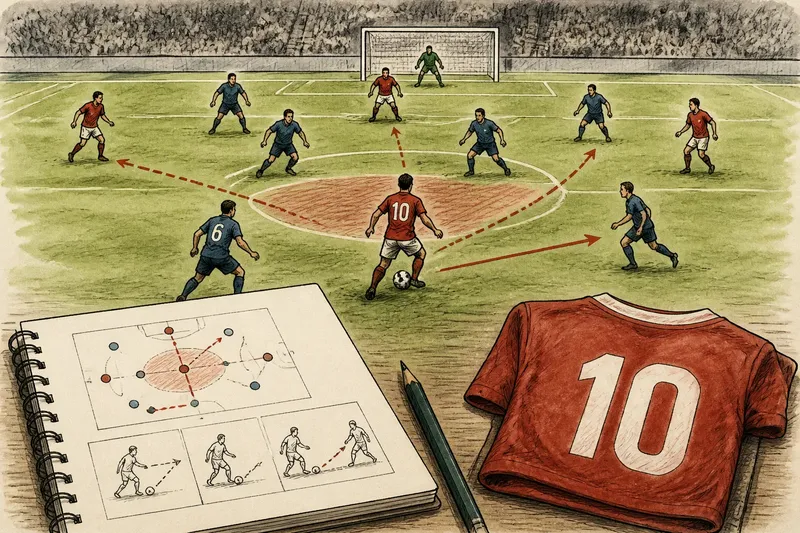
The number ten became a football role as teams looked for a player to connect midfield possession with attacks near goal. The number ten’s history is less about a shirt than a recurring tactical problem: who finds space between the opposition’s midfield and defence, and what can they do with the ball there?
Number ten history
In many traditional team selections, players wore numbers that corresponded to their positions, though conventions differed between countries, clubs and eras. As familiar formations took hold, the number ten often came to be associated with a player operating behind the centre-forward. That pattern helped make “the ten” shorthand for an advanced creator; it was a convention, not a universal rule.
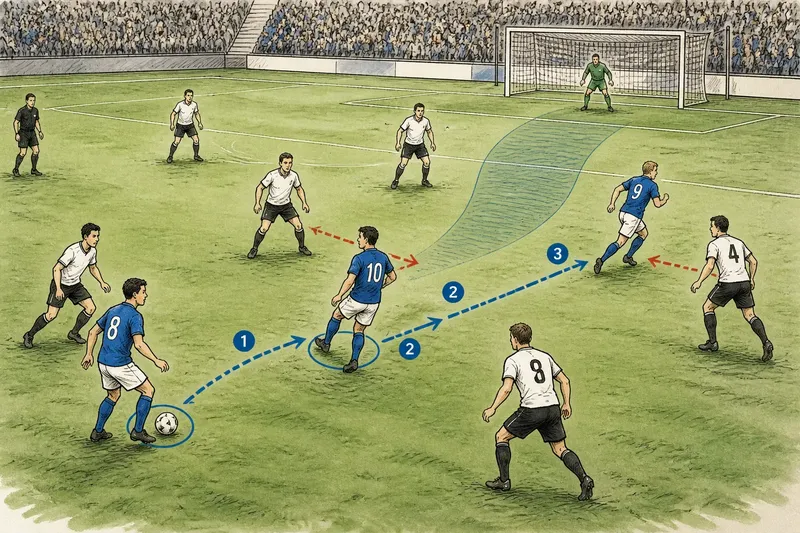
The role drew on a useful patch of ground: the space between the opposition’s midfield line and its defenders. A player receiving there could turn towards goal, slip a pass to a striker or carry the ball at a defence forced to make a decision. The position was valuable because it linked two parts of a team that could otherwise become separated.
Where a team used a dedicated player behind the centre-forward, the job could be relatively clear. The number ten might drift across the pitch to find an opening, but their starting point was usually advanced and central. Their work involved more than passing: receiving under pressure, drawing a marker, combining with a forward and arriving near the box all mattered.
The role changes shape
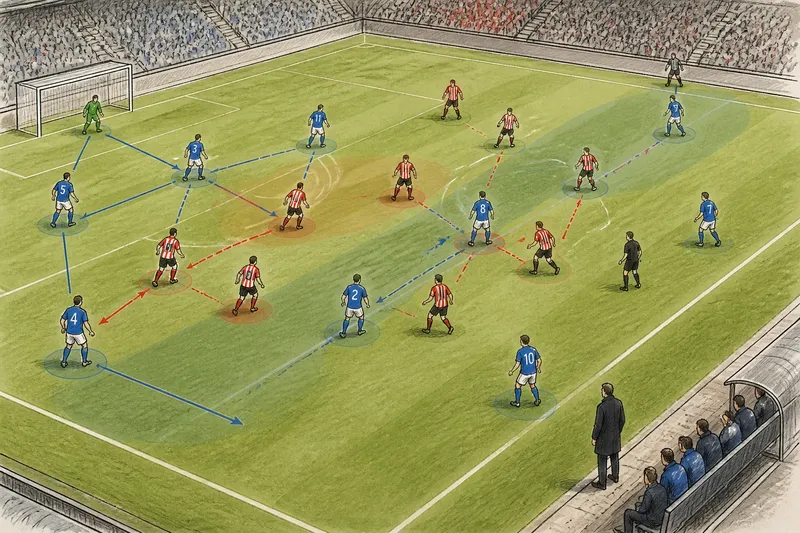
As teams adopted different structures, the same attacking responsibilities were distributed in new ways. A lone forward could be supported by a pair of narrow attacking midfielders; a central midfielder could push forward while another held position; a winger could move inside and occupy the space associated with a ten. The player wearing ten remained familiar to supporters, but the tactical job became less fixed.
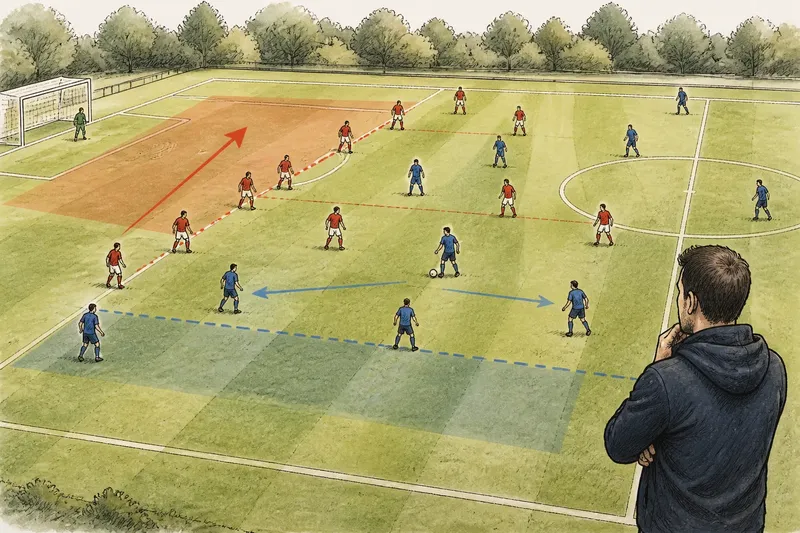
This shift also reflects a basic defensive response. If an opponent closely marks a central creator, that player may be forced away from their preferred receiving area. A team can answer by rotating positions, bringing a midfielder forward or asking a wide attacker to move inside. The aim is not always to preserve a classic number ten, but to keep someone available to link play and threaten goal.
Think of the shirt number as a name on a pigeonhole, not a map of the room. It tells you something about convention, but not where its occupant will spend the match. A modern number ten might start wide, drop into midfield or move beyond the striker, depending on the team’s plan and the opponent’s shape.
Reading the job
To identify the role, watch where the player goes when their team has settled possession. Do they seek the central gap behind midfield? Do they come short to help build an attack, or stay high to receive between defenders? Their movement before the pass often says more than their listed position.
- Starting location: Check whether the player begins centrally, in a half-space or near the touchline. If they repeatedly start centrally, consider a central role; if they begin wide, check whether they move inside before deciding they are a winger.
- Receiving direction: Check whether they turn towards goal or return the ball to a deeper teammate. If they regularly turn forward, read them as an advanced link; if they mostly recycle possession, consider a deeper supporting job.
- Connection to the striker: Check whether they combine close to the forward, run beyond them or draw a defender away. If they repeatedly link play behind the striker, consider a number ten role; if they mainly threaten the space beside or beyond the forward, consider a second-striker function.
- Defensive task: Check whom they pressure when possession is lost. If they drop beside a central midfielder, include that defensive workload in your reading; if they stay near the opposition’s defenders, note that their out-of-possession assignment is more advanced.
- Position after a switch: Check whether they remain central or move wide when the ball reaches the far side. If they stay available in the middle, read that as evidence of a linking job; if they consistently support from the flank, allow for a wider assignment.
- Repeatability: Check whether the same movements recur across separate attacks. If they do, treat the pattern as evidence of the usual role; if the movement happens only once, keep your judgement open for another possession.
These clues work best as a pattern across several possessions. A single run can be an improvised response; repeated movements reveal the player’s usual assignment. Also distinguish the role in possession from the role without the ball, since a team may use the same player differently in each phase.
When does the role fit?
Does every number ten play centrally?
No. Some begin wide and move inside, while others operate in a pocket behind a striker or drop towards midfield. The useful question is where they repeatedly help create or finish attacks, not where they stand for the opening whistle.
Can a team play without a number ten?
Yes. A team can share the creative work among central midfielders, wingers and forwards rather than assigning it to one advanced playmaker. The role’s functions may still appear, but no single player has to perform all of them.
Why does the shirt number still matter?
The number carries tradition and can signal how a club or supporter understands a player’s identity. It remains a helpful clue, but it cannot describe every movement, defensive duty or partnership in a tactical system.
How can I tell a ten from a second striker?
Look at the player’s usual relationship with the midfield. A ten often helps link possession through the space behind midfield, while a second striker tends to work closer to the main forward and threaten the goal more directly; teams can blur that boundary.
A matchday reading plan
Say you are watching a team whose number ten starts on the left of the team sheet. In the opening passages, they leave the touchline whenever a central midfielder has the ball, then receive between the opposition’s midfield and defence. Later, they move closer to the striker as the attack reaches the final third. That pattern suggests a wide starting position with a central creative job, rather than a conventional winger’s fixed lane.
Use a simple routine across the match:
- Before kick-off, note the player’s listed position.
- Identify the nearest forward.
- During the first sustained attacks, track where the player receives.
- After the team loses the ball, watch whom the player pressures or marks.
- Later, check whether the same pattern holds when the opponent changes its pressure.
If the job shifts, look for a change in the surrounding positions or the opponent’s pressure. The number ten remains a useful idea because teams still need ways to connect midfield with danger near goal. To understand why the number ten became a football role, treat the shirt as a historical hint, then let repeated movements explain the actual job.